


Dayton creates the talent. Does it create the opportunity?

After his first fine art fair, artist Jamaal Durr says Dayton is a good place to start an art career and a hard place to grow one.

By RoShawn Winburn, Publisher
At the Atlanta Art Fair, Jamaal Durr's drawings hung in the same rooms as galleries and artists he had followed for years. He even met one of his favorite artists, Kevin "WAK" Williams.
It was the Dayton artist's first fine art fair. It also gave him a close look at an arts economy he says his hometown doesn't have.
"Atlanta has a strong arts scene, especially for Black artists," Durr said. "In comparison to Dayton, it was night and day."
Durr calls Dayton an "incubator city."
"It's a great place for creatives to hone their skills and be introduced to different mediums before heading off elsewhere," he said.
That last phrase is the question his trip raises. If Dayton artists can compete nationally, what would it take for them to build careers here?
Drawing after midnight
Born in Lima, Durr moved to Dayton in 2005 at 13. He started making art around age 6, first in coloring books and then with drawings of his family, friends, home and school.
Art stayed a hobby until January 2016. Durr was 23 and raising two young children. He had lost his job and his apartment, his car had been repossessed (he later got it back), and he had moved in with his mother and stepfather.
He decided to take his art seriously. He worked days at Miami Valley Hospital, cared for his children in the evening and drew from 10 p.m. to 2 a.m. The next day, he posted the pieces on social media.
After a few years, his audience grew and his work began to sell. In June 2020, during the pandemic, he went full time.
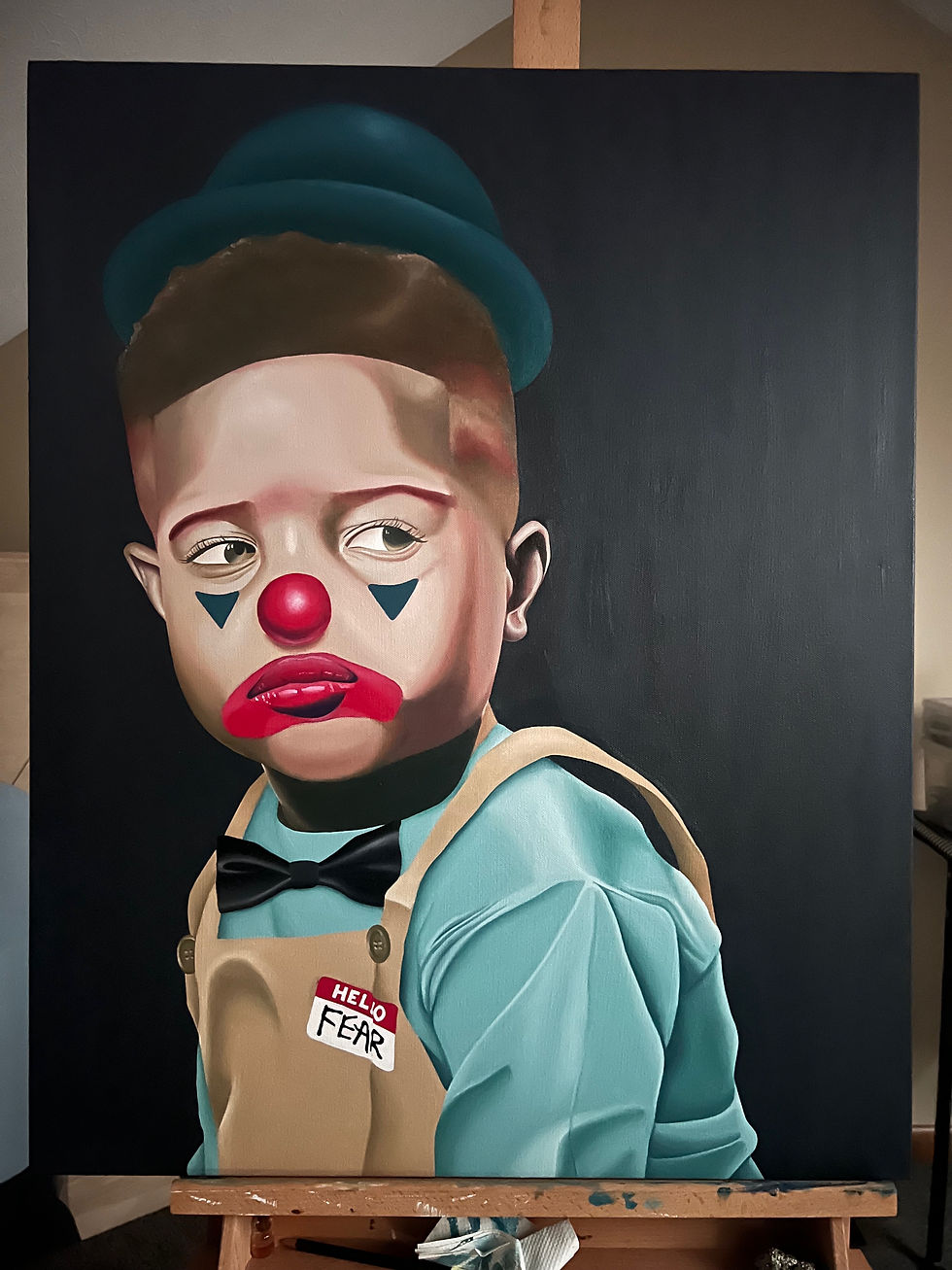
Durr describes his style as psychological figurative realism. Working in oil, charcoal and graphite, he uses the human figure to explore identity, masculinity, emotional struggle and what people keep hidden.
Gray in a room full of color
Durr's Atlanta-based manager, Aisha Bright, arranged the fair. She has worked with him for almost three years and handled the submission and logistics.
He showed pieces from his newest collection, "Don't Panic," charcoal and graphite drawings on round wood panels measuring 18 or 48 inches across. The series deals with emotional restraint and choosing composure over chaos in hard moments.

Durr said his grayscale pieces stood out among the saturated color around them. One arts writer told him she wanted to write about his work, the kind of attention he says he needs more of at this stage.
He also noticed how Atlanta backs its own. Galleries brought work by Atlanta-based artists and by art students from local universities. Nonprofits were there creating opportunities for local artists.
Durr said Dayton has no galleries that represent artists and help them sell work and build careers, and no art fairs on Atlanta's level. He attributes that to both local interest and resources.

Paying to play
Money is his biggest obstacle. "To be in the right spaces you have to pay to play," he said.
A booth at a top fine art fair can cost $10,000 to $50,000, Durr said, before shipping, insurance, travel, lodging and food. Galleries cover most of that, but artists may still pay part of the booth rent, with no guarantee of sales.
Durr runs his practice like a business. He tracks how much he earns each month and where it comes from. Sales of original artwork make up 45% to 60% of his yearly revenue.
He credits Black Palette Art Gallery, EbonNia Gallery, Edward A. Dixon Gallery, The Contemporary Dayton, Culture Works and the Montgomery County Arts and Cultural District. Still, he said Dayton needs more opportunities, stronger links between artists and collectors or funders, public education on why collecting matters and more media coverage of art.
Without that, he said, artists end up "toppling over each other" for a few buyers and go looking for other markets.
Still invested at home
Durr is in his third year with Black Boy Brilliance, a program with Preschool Promise and the Dayton Art Institute. He visits preschool classrooms and leads art lessons built around what the children are reading.
In January, he will show in the Black Creativity Juried Art Exhibition in Chicago. He plans to spend much of 2027 on a body of work based on letters his father sent him during periods of incarceration, when Durr was a child and young adult.
His advice to young Dayton artists starts with business. Learn contracts, proposals, cash flow and marketing. Study how the art world works. Build relationships with gallerists, curators, writers and collectors.
Then, he said, "Make good art. Hone your skills. Study the Masters. Develop your story."
See Durr's work at jqvisuals.net or on Instagram at @jamaaldurr_fineart.



Comments