Search Results
Search this site
339 results found with an empty search
- Dayton Welcomes New Mayor and City Commissioners at Oath of Office Ceremony
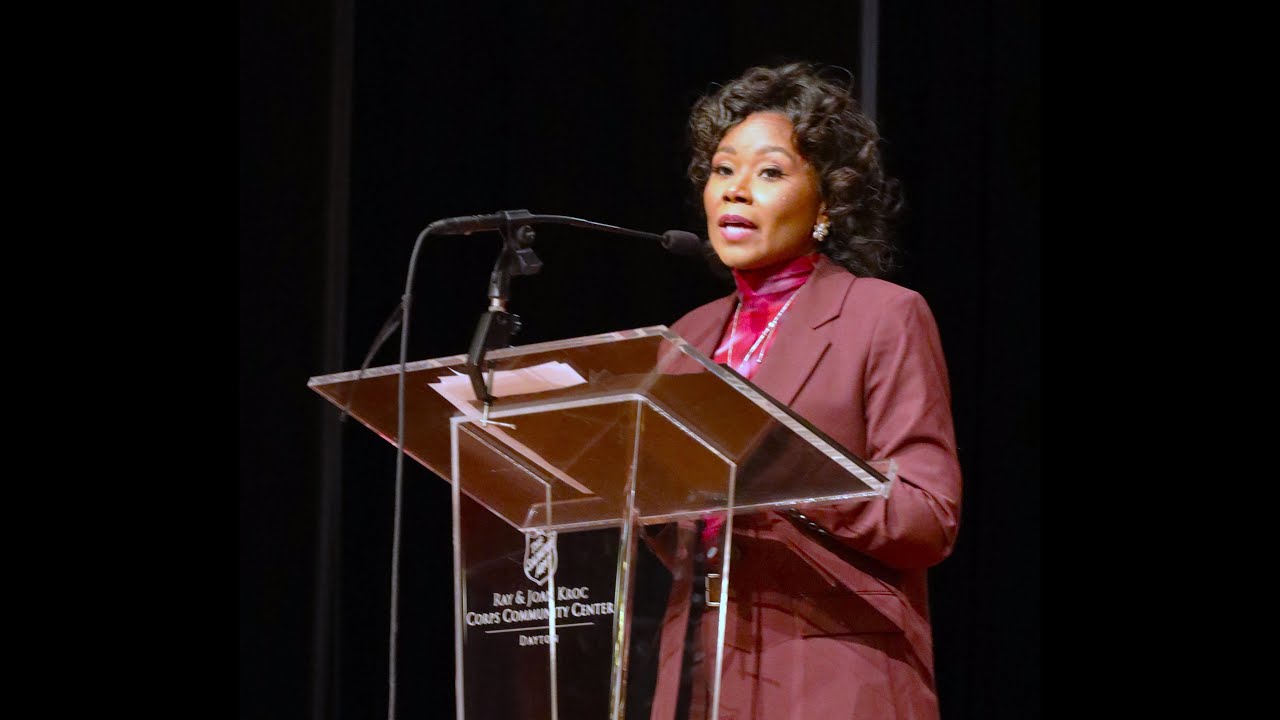
The City of Dayton held an Oath of Office Ceremony to begin the four-year terms of officials elected in the November 4, 2025, election. The ceremony took place on Monday, Jan. 5, at the Kroc Center, 1000 N. Keowee St. DAYTON, OH — City of Dayton residents gathered at the Dayton Kroc Center on January 5 to witness the official swearing-in of newly elected city leaders during a public Oath of Office ceremony. The ceremony marked the formal transition of leadership for the City of Dayton following the November election. Community members, family, friends, and local leaders attended to celebrate the occasion and offer support to the incoming administration. Mayor Shenise Turner-Sloss was sworn in alongside City Commissioner Darryl Fairchild, who begins his third term, and City Commissioner Darius Beckham, who enters his first term on the commission. Mayor Turner-Sloss, who previously served on the Dayton City Commission, becomes the city’s next mayor at a time when Dayton continues to address key issues including housing, economic development, public safety, and neighborhood investment. Commissioner Fairchild, a longtime public servant, returns to the commission with experience spanning multiple terms, while Commissioner Beckham begins his service bringing new perspective and leadership to the body. City officials emphasized collaboration, community engagement, and continued progress as priorities moving forward. The Oath of Office ceremony represents the beginning of a new chapter in Dayton’s municipal leadership and governance.
- Buc-ee’s Mass Hiring Event Coming to Dayton: How to Apply and What to Know
Buc-ee’s is hiring in the Dayton area and hosting a Mass Hiring Event this February at the Hope Hotel and Conference Center . If you’re looking for full-time work , weekly pay , and benefits with room to grow, this is an opportunity worth moving on quickly. Important: Interviews are by invitation only , which means you’ll want to apply as soon as possible to be considered. Event Details Buc-ee’s Mass Hiring Event Dates: Tuesday, February 17 – Thursday, February 19 Time: 8:00 a.m. – 5:00 p.m. Location: Hope Hotel & Conference Center Address: 10823 Chidlaw Rd. #A, Dayton, OH 45433 Positions Available Buc-ee’s is hiring for the following roles: Cashier Deli / Food Service Grocery Gift Janitorial / Cleaning Maintenance Pay and Benefits Snapshot Pay Range: $18–$23 per hour Schedule: Full-time Pay Frequency: Paid weekly Benefits listed include: Medical, Dental, Vision 401(k): 100% match up to 6% 3 weeks paid time off (use it, cash it, or roll it) How to Get an Interview Because interviews are by invitation only , the best move is to apply online immediately. Apply / More In fo: www.buc-ees.com After applying, keep an eye on your email and phone for next steps and scheduling information. What to Bring (If You’re Invited) If you receive an invitation to interview, show up prepared: A photo ID Copies of your resume (if you have one) A list of previous employers and dates of employment Reliable contact information and references A pen and notepad Quick Preparation Tips If you want to stand out in a high-volume hiring event: Be ready to explain what schedule you can work (days, nights, weekends). Highlight customer service experience and reliability. Dress business casual (clean, neat, professional). Practice a short introduction: who you are, what you’re applying for, why you’re a great fit. Plan to arrive 10–15 minutes early.
- Deceuninck North America to Host Hiring Event in Dayton Region
Company Seeking at Hire 100 Production Workers During January 7th Event MONROE, OH – Deceuninck North America, an industry-leading manufacturer and extruder of energy-efficient PVC window and door systems, is hosting a hiring event on January 7th from 3 p.m. to 6 p.m. at the company’s headquarters in Monroe ( 351 North Garver Road, Monroe, OH 45050 ). During the event, job seekers will get an exclusive look at the organization’s modern manufacturing processes, a tour of the facility, meet-and-greet opportunities with current team members, and on-the-spot interviews. “At Deceuninck North America, we’re always looking for talented, dedicated individuals to join our team,” said Terrence Ceulemans, president at Deceuninck North America. “We are building the factory of the future at our Monroe facility, and this hiring event is the perfect chance for Dayton-area residents to become part of a forward-thinking, collaborative, and innovative workplace.” Deceuninck North America is looking to fill 100 positions in key production roles, including: Open Positions 1. Extrusion operator: An extrusion operator runs and monitors the machines that form PVC window and door profiles, ensuring quality, accuracy, and smooth production throughout each shift. 2. Compound operator: A compound operator measures, blends, and prepares raw materials to create consistent PVC compounds that meet quality standards for production. 3. Material handler: Material handlers drive an electric powered industrial forklift to push, pull, lift, stack, tier, or move products from production lines to warehouse staging/buffer locations. Compensation for these positions begins at $19 per hour , with the potential to earn up to $23 per hour within six months of employment . “Attendees of the hiring event will see firsthand how innovation drives everything we do at Deceuninck, from production efficiency to product quality,” said Ceulemans. “New team members will play a key role in shaping the future of manufacturing here in Monroe.” To learn more about the open positions and apply, visit: https://deceuninckna.com/careers/ About Deceuninck North America Deceuninck North America, LLC is an industry-leading fully integrated design, compounding, tooling, lamination, fiberglass pultrusion and PVC extrusion company that produces energy-efficient residenti al and commercial window and door systems. The company is committed to developing high-performance products and has customers that produce over 7 million windows and doors annually. Its headquarters are in Monroe, Ohio, with a facility in Fernley, Nevada. Deceuninck North America is part of the Deceuninck Group, an integrated global organization that produces PVC window systems for the building industry. Deceuninck Group is headquartered in Belgium, is listed on Euronext Brussels (ticker: DECB) and employs 3,700 people servicing more than 4,000 customers in more than 90 countries with worldwide production facilities. For more information, please visit DeceuninckNA.com or www.deceuninck.com/investors .
- Movies and TV Shows Casting in Dayton
Backstage compiled a list of movies and TV shows casting in Dayton. The glitz and glam of Hollywood captures the attention of Americans starting from an early age. Beyond celebrities’ Instagram Stories and red carpet poses, there are actors out there paying their dues and honing their craft in pursuit of a sustainable career or a fulfilling sideline. Submitting to casting calls is a big part of that journey. Whether you’re a working actor or an aspiring one, you might be curious to know which movies and TV shows are casting roles near you. Backstage compiled a list of projects casting right now in Dayton, nearby cities, and nationwide, and which roles they’re looking to fill.
- Dayton Homes to Benefit From New Home Repair Loan Program
A new program intended to help Daytonians fix up their homes is expected to go live next year with more than $2.5 million set aside to help 80 homes across the city. Dayton’s Mayor-Elect Shenise Turner-Sloss announced Home Repair Revolving Loan program Tuesday on Facebook. Turner-Sloss announced the city would be investing $2.6 million of forgivable loans into Dayton neighborhoods with plans to expand later down the line. The loans would be for essential exterior repairs like roofing, sidewalks and more for around 80 homes. The loans would target Madden Hills, Dayton View Triangle, Fairview, and Wolf Creek. “It’s great because you know anything that can bring the property value up, make your neighborhood look better is great for the neighborhood,” said Dayton View Triangle resident Corey Hill. For people like David R. Gilbert Jr., whose Dayton View Triangle home turned 100 in 2025, repairs are constant in order to keep his home in order. “I’m glad to see that they’re looking out for areas like this,” said Gilbert. “It will be helpful. It will be needed.” For others nearby living on a fixed income, this program will be a massive help. “There’s a lot of older residents here who may not, can’t afford these upgrades to their house and this program would help. $2.6 million comes from funding provided by Issue 6, an income tax increase voted on in 2024. Some resident said they are cautiously optimistic, saying they have heard promises in the past that have fallen short but hope this plan bears fruit. “Money should be targeted to the homes that deserve the improvement,” said Thurman. “They should just look at the whole scheme of what they’re doing and make sure it’s fair for the residents.” Details on when the program will launch and how people can apply haven’t been released. More information at https://www.daytonohio.gov/m/newsflash/home/detail/771
- As Term Comes to a Close, Mims Reflects On Impact On Youth
Mayor Jeffrey Mims Jr. Reflects on Service and Youth Impact in Dayton Wednesday marked the final Dayton City Commission meeting of the year, which also meant it was the last time for Mayor Jeffrey Mims Jr. to bang the gavel as the group’s leader. The meeting was Mims’ penultimate official appearance, with just a swearing in of new commissioners remaining. After the closing of the city commission meeting, he took some time to talk about what he calls his life’s work. Through decades of influencing younger generations working with Dayton Public Schools to present day, there are few — if any — moments in between where Mims stopped working toward improving the quality of life for people living in the city he calls home. Mims first won a seat as Dayton City Commission in 2014, eventually being elected mayor in 2021. He lost his re-election bid in November to City Commissioner Shenise Turner-Sloss. Working in jobs serving the public for decades Mims focus was simple: safety, housing, education, jobs and recreation. Mims spoke proudly about his team’s efforts over the years to bring in new investors, help create jobs and increase the median income. He may be leaving office, but the leadership component remains. “We have to do a better job in terms of marketing and letting people know so many of the great things that” A lifetime educator, coach and mentor hoping to share his experiences with others. “How do you balance the good, the bad and sometimes the ugly,” he said, “and to — bottom line — improve the quality of life for the citizens that we have in our community.” Over the years, Mims discovered opportunities in the Dayton region that worked well for him. He finds joy in passing that onto others. “For them to go out and make their own positive contribution to this community. That’s my big reward.” Although his term is complete, he’s not really going anywhere. “I’ll be involved in something some way, shape or form again, bottom line, improving the quality of life of the citizens that we have in Dayton,” he said. Mims says he may take a step back for a while to enjoy a little rest and relaxation. One thing he says he’ll never stop doing is showing up for the people in the Gem City.
- Ohio Enacts New School Rules on Cell Phones and Narcan
COLUMBUS, Ohio (WLIO) — New Ohio laws are set to take effect Jan. 1, including changes impacting school policies statewide. Under one new law, school districts are required to have policies in place that prohibit student cell phone use during the school day. Ohio lawmakers say the measure is intended to reduce distractions and help students stay focused in the classroom. Watch the Governor's Full Press Conference Another law taking effect allows Ohio schools to keep overdose reversal drugs, such as Narcan, on school grounds. The legislation establishes guidelines and policies for administering the medication and requires schools to report its use to the state. Parents must also be notified if the drug is administered to a student.
- Ohio Minimum Wage Adjusts for Inflation to $11.00
On January 1, 2026, Ohio’s minimum wage will increase by 30-cents to $11.00 per hour. The Economic Policy Institute estimates that approximately 103,800 Ohioans paid less than $11.00 will experience a direct wage increase, and 169,300 more Ohioans will likely see an increase in their wages as employers adjust their pay scales. The minimum wage for tipped workers will increase to $5.50, with direct or projected indirect effects on every one of the 97,100 Ohioans in tipped occupations. The adjustment will help an estimated 171,800 female and 101,400 male Ohioans. By Census-classified race/ethnicity, it will benefit an estimated 198,800 white workers, 43,000 Black workers, 14,400 Hispanic/Latine workers, 6,000 Asian workers, and 10,900 workers of “other race[s]/ethnicit[ies].” Nearly two-thirds of the workers affected are over 20 years old. Nearly three-quarters work more than 20 hours per week. Almost one in ten Ohio children — 203,900 total — live in homes that will be helped by this increase. Policy Matters Ohio work and wages researcher Heather Smith issued the following statement: “Thanks to the foresight of Ohio voters in 2006, who passed a ballot initiative to raise the minimum wage and annually adjust it based on inflation, the lowest-paid working Ohioans will see a wage increase on January 1st. As a result, nearly a quarter of Ohio families classified as “in poverty” will experience some modicum of relief from rising prices. “Across the country, voters have been passing $15 minimum wage laws, and in 2026 more workers will live in a state with a $15 minimum wage than in a state that relies on the federal minimum of $7.25. While Ohio’s indexed minimum wage is nothing to scoff at – it has ensured hundreds of thousands of Ohioans received relief from inflation for nearly twenty years – Ohio should join the ranks of states with minimum wage laws closer to the cost of living. Ohioans deserve better, and our economy can handle it. It’s time to raise the wage.”
- Attorney Zulu Ali Speaks on Justice: Trying Cases in a System Built to Oppress Black People
Nationwide — Attorney Zulu Ali, a former police officer and U.S. Marine Corps veteran, has released a powerful commentary titled “Attorney Zulu Ali Speaks on Justice: Trying Cases in a System Built to Oppress Black People.” In it, Ali argues that the American court system is racially biased beyond repair, compares being Black in the justice system to “playing an entire lifetime of away games,” and challenges the notion that recent reforms have meaningfully changed the system. Playing Every Game on the Road: Race, Power, and Why Our Courts Are Beyond Repair When I walk into a courtroom as a Black man, a former police officer, and a U.S. Marine Corps veteran, I am still playing an away game. It’s not my stadium. Not my crowd. Not my locker room. And definitely not my officials. A football coach once told me: “On the road, you can’t win by one. You’ve got to blow them out. You cannot leave it in the hands of the officials.” Being Black in the American justice system is like playing an entire lifetime of road games. The referees wear robes, the uniforms say “District Attorney,” and the crowd is called a “jury of your peers” even when it looks nothing like your community. This is not an accident. It’s design. Trial Is Theater – and Race Is the Script We like to pretend trials are neutral, mechanical truth-finding processes. That’s a lie. Trial is theater. The jury is the audience. The lawyers and witnesses are the cast. The judge is the director. And like any theater, the way the audience sees the show determines how the story ends. In America, race is not just “a factor” in that story. It is the frame. It shapes what jurors see, what they doubt, who they believe, and who they’re willing to throw away. Studies have shown that racial bias—both explicit and implicit—infects every stage of the criminal process: policing, charging, bail, plea bargaining, sentencing, and parole. Black and Latino people are policed more, held pretrial more, and sentenced more harshly than similarly situated white people. Black Americans are imprisoned in state prisons at nearly five times the rate of white Americans. You don’t get numbers like that from “a few bad apples.” You get them from a machine that is doing exactly what it was built to do. The Machine Was Built for Screwdrivers, Not Justice Imagine a factory machine designed to produce screwdrivers. One day, someone walks in and says, “From now on, we’re going to make wrenches.” You can swap out the workers. You can repaint the machine. You can add inspirational posters on the wall. But if you don’t rebuild that machine from the inside out, it’s still going to make screwdrivers. That’s what it was built to do. Our justice system is that machine. From slave patrols and Black Codes to convict leasing and the Jim Crow-era use of criminal courts to control Black labor, the system was built to police, control, and exploit Black bodies—and to protect white property and power. Those roots aren’t just “history.” They are baked into how police departments operate, how prosecutors charge, how judges sentence, and how juries are selected today. Research recently found that about three-quarters of Black adults say the prison system was designed to hold Black people back. Nearly nine in ten Black Americans say the courts and judicial process need major changes or need to be completely rebuilt for Black people to be treated fairly. That’s not paranoia. That’s experience. Jury Selection: Where “Fairness” Goes to Die If trial is theater, jury selection is casting. And America has spent over a century making sure Black people stay out of the jury box. Race-based discrimination in jury selection was technically outlawed nearly 150 years ago, and the Supreme Court’s Batson v. Kentucky decision in 1986 said you can’t strike jurors because of race. On paper, that sounds promising. In reality? It’s theater again. The Equal Justice Initiative (EJI) has documented a long history of courts tolerating racial discrimination in jury selection and a “continuing indifference” to fixing it. They show that people of color are consistently underrepresented in jury pools, and when they do make it into the courtroom, prosecutors strike them at far higher rates than white jurors. Studies of specific jurisdictions have found prosecutors striking Black jurors at three to four times the rate of white jurors. EJI’s more recent work links racially biased jury selection directly to wrongful convictions and even wrongful executions. The message is clear: The courtroom says “Equal Justice Under Law.” The jury box whispers “Not for you.” What This Feels Like in Real Life I’ve been there. In one case, a prosecutor used a flimsy, pretextual reason to kick a Black juror off the panel. She was one of maybe two Black people on the entire panel. I challenged it under the law that’s supposed to prevent racially discriminatory strikes. The court denied my motion. Everything was fine, apparently. Later, I exercised my own peremptory challenges to excuse two white jurors for reasons that, in my view, were just as grounded as anything the prosecutor had argued. This time, the court granted Wheeler (Batson) motions against me. Same rules. Same courtroom. Totally different energy, depending on who is being excluded and who is doing the excluding. To add insult to injury, I was told by a district attorney that the district attorney’s office now uses that case in trainings to teach other prosecutors how to “deal with” me. Not how to deal with racism in jury selection. Not how to deal with bias. How to deal with me—a Black man, a former cop, and a Marine who refuses to bow to the machine. If race weren’t central to how the system operates, that wouldn’t even make sense. Why Black Jurors Matter – and Why the System Fights Them To truly presume someone innocent in a criminal trial, a juror has to be willing to believe that: The police arrested the wrong person. The district attorney charged the wrong person. The court allowed a case against the wrong person to go all the way to trial. That takes a level of skepticism about the system that many white jurors simply don’t have—because the system wasn’t built to target them. Black jurors, by contrast, often come in with lived experience: stops, searches, family members arrested or overcharged, stories of people railroaded, or simply the knowledge that the system doesn’t treat Black folks like it treats white folks or others. Surveys show that nearly nine in ten Black adults say Black people are treated less fairly by the criminal justice system than whites, compared with a much smaller majority of white adults. That doesn’t make Black jurors “biased.” It makes them informed. But the system treats that life experience as a problem to be solved, not a perspective to be valued. Prosecutors routinely rationalize strikes of Black jurors with coded reasons—“lives in a high crime area,” “appeared angry,” “had negative experiences with police,” “seemed too sympathetic.” EJI has documented that courts accept these explanations again and again, even when prosecutors use the vast majority of their strikes against Black jurors. So when I say that, in many cases involving Black defendants, Black jurors are “the best jurors,” I don’t mean they’ll automatically vote not guilty. I mean they are the ones most likely to see past the costume of the system—to question the story being staged in front of them. And that is precisely what the machine cannot tolerate. Judges: The Referees Who Think They Are the Game We’re told that judges are neutral “umpires” calling balls and strikes. That’s cute. In reality, judges are embedded in the same culture and power structure as everyone else in the courthouse. Many are former prosecutors. Many worked closely with the very district attorney’s offices now appearing before them. Their professional, social, and political lives are deeply intertwined with one side of the courtroom. Legal scholars and advocates have long noted that judges’ relationships with prosecutors, their prior roles, and their unexamined biases shape everything from who they find “credible” to how they rule on jury challenges, suppression motions, and sentencing. I’ve seen judges who genuinely strive to be fair. I’ve also seen the other kind: Judges who treat defense objections like annoyances and prosecution objections like wisdom; Judges whose body language tells the jury exactly which side they should trust; and Judges who forget they are there to apply the law and start behaving like they are the law. You can almost always guess who a judge was before they put on the robe: lifelong public defender or corporate lawyer? Former D.A. with a taste for “tough on crime” politics? Someone who spent their career needing respect and power they never had—and now intends to collect? Give a person like that the power of the state, control of the courtroom, and the ability to send people to prison, and watch how quickly “judicial temperament” turns into a power trip. As the saying goes: Man—or woman—will always mess up power. The robe doesn’t cure that. It amplifies it. How the System Strains Lawyers Who Insist on Trial Defense lawyers who regularly take cases to jury trial—particularly those who refuse to simply move cases through the system—are often spread thin. As a Black defense attorney who tries more cases than most, I see this pressure up close. Because there are relatively few attorneys who insist on trying a high volume of cases, the same lawyers end up on multiple trial calendars at once. Instead of being understood as a consequence of exercising the constitutional right to trial, this reality is frequently treated as a scheduling problem attributed to the defense. When continuances result from courtroom congestion, the court’s calendar, or the prosecutor’s conflicts, those delays are typically absorbed as part of the ordinary operation of the system. The pattern is subtle but clear: when the state is not ready, it is institutional; when the defense is not available because it is actually trying cases, it is personalized. This dynamic sends a broader message. Lawyers who insist on taking cases to trial, rather than routinely pleading them out, face structural pressure and reputational costs. In that way, the system does not only resist defendants who challenge its narrative; it also resists the defense attorneys who refuse to quietly go along with it. The New Racial Justice Acts: Patching a Cracked Foundation Some will point to reforms like the Racial Justice Acts and new jury selection laws and say, “See? The system is fixing itself.” Let’s be honest about what they do—and what they don’t. California’s Racial Justice Act and AB 3070 California’s Racial Justice Act of 2020 (AB 2542) was sold as a breakthrough. On paper, it lets defendants challenge convictions and sentences based on racial bias—whether that bias shows up in statistics about charging and sentencing or in explicit conduct by judges, lawyers, police, or jurors. We’ve already seen it used to knock out extreme gang enhancements where racist texts and data proved that young Black defendants were being overcharged. A judge tossed those enhancements under the Act, and that was celebrated as progress. Another reform, AB 3070, was supposed to fix the long broken Batson/Wheeler system for jury selection. Instead of forcing a defendant to prove what a prosecutor was “really thinking,” it claims to use an objective test: if an “objectively reasonable” person could see race or another protected trait as a factor in a peremptory strike, the strike should not stand. That sounds good in theory. But in practice, when the same judges, with the same mindset, apply this “new” standard, the system keeps working exactly like the old one. In my own case, the so-called reform was actually weaponized against me. A Black female prosecutor removed a Black juror for a clearly pretextual reason, and my challenge was denied. Later, when I excused two white jurors, the court eagerly granted Wheeler motions against me—using the very framework that was supposed to stop racial discrimination in jury selection to police a Black defense attorney who would not play along. The new law did not protect Black participation in the jury; it protected the old narrative and punished the person challenging it. That is not advancement—that is the same script with updated language. These statutes are not meaningless; they came out of decades of struggle by defense lawyers, civil rights organizations, and communities who refused to stay silent. They deserve recognition. But look at what it took just to get here: more than 30 years after Batson—a decision that should have ended race-based jury strikes—California had to admit that the system was still openly discriminatory and try again. And even now, lawsuits and data show that Black and Hispanic defendants continue to receive longer sentences than similarly situated white defendants, while courts are only beginning to test how far the Racial Justice Act will really reach. We keep laying patch after patch on a foundation that was cracked from the beginning, and judges who don’t truly respect these laws ensure that, in real time, the old machine keeps doing what it was always built to do. “Beyond Repair” Is Not Hyperbole. It’s a Diagnosis. Some people get uncomfortable when I say the justice system is racially biased beyond repair. They hear that as hopelessness. I mean it as honesty. If a system was designed from the ground up to do a particular thing—to control Black people, protect white wealth, and maintain hierarchy—then you don’t “reform” it into something else. You build something new. Pew’s research shows that nearly nine in ten Black Americans believe policing, courts, and prisons need major changes or complete rebuilding. That’s not a cry for a fresh coat of paint. That’s a call to tear up the blueprints. When you add layers of “race blind charging,” “bias trainings,” and new statutes on top of a machine designed to produce racialized outcomes, you may smooth out the roughest edges, but the product is the same: Black people stopped more, charged more, jailed more, and sentenced more; Juries that don’t reflect the communities being judged; and Judges and prosecutors operating in a culture that treats Black suffering as background noise instead of a red alert sign that the system has failed. That’s not malfunction. That’s function. Respect Where It’s Due – and the Line I Won’t Cross Let me be clear: I have nothing but respect for district attorneys and judges who are fair. I’ve met them. I’ve stood in front of judges who were former Marines or military veterans who didn’t need the robe to feel like somebody. Those folks tend to be more grounded. They understand chain of command, service, humility. They don’t take it personally when a defense lawyer fights for their client. I do have a bias in favor of those public servants—especially my Marine Corps brothers and sisters—who bring that integrity into the courtroom. They exist. But they exist inside a machine that is bigger than any one good person. A fair judge can soften the blow in a specific case. A prosecutor with a conscience can refuse to file an unfair charge. But neither of them can turn a screwdriver factory into a wrench factory by themselves. These are my views based on my experience as a Black defense attorney, former police officer, and U.S. Marine. So What Do We Do? If you’re looking for a neat resolution, you won’t get it from me. What I can offer is clarity: Stop pretending race is a side issue. Race is the water the system swims in. Any conversation about “justice” that tries to tiptoe around that is just another performance; Stop acting like juries are neutral. How we build jury pools, how we excuse jurors, and which life experiences we treat as “bias” is where racism shows its face most clearly; Stop romanticizing judges as neutral referees. Look at who they were before the robe, whose company they keep, whose worldview they share—and how often their “discretion” cuts only one way; and Stop talking about reform like a tune-up. When Black Americans overwhelmingly say the courts need to be rebuilt, believe them. And if you’re Black and find yourself in this system—whether as a defendant, a lawyer, or a potential juror—understand this: you are not crazy, you are not “too radical,” and you are definitely not alone. You are playing an away game. The crowd isn’t cheering for you. The officials are not neutral. The scoreboard is rigged. So yes, we fight like hell inside the existing system—file motions under the Racial Justice Act, make the record, challenge biased jury strikes, expose racist patterns. That’s survival. But we cannot mistake survival tactics for structural change. Until we rebuild the machine itself, it will keep doing exactly what it was built to do. And for Black people in America, that means one thing: The justice system isn’t broken. It’s working. That’s the problem.
- NCNW Celebrates 90 Years: Building a Legacy of Power
Faith Daniels, Letitia Perry, and Brenda Cochran Most Companies, Organizations, Schools or Colleges can Develop a great deal during the span of ninety years. For NCNW – known as the “National Council for Negro Women” not only was this organization born in 1935, but during this span of time has been able to Build a Legacy of Power and the organization has accomplished this growth, through leading and empowering women of African Descent including their families along with the communities in which they live. There are nearly countless women who have paved the growth and continued success of NCNW, but the history of the organization will always originate in 1945 when Dr. Mary McLeod Bethune became the sole Black delegate and contributor to the Charter of the UN. Today the United Nations at eighty years old, has continued a legacy laid by… As one of the women honored, I knew Mrs. Bethune when I lived in Daytona Beach Florida. I am thrilled to say that I knew her well and always felt her to be so Amazing and a woman whom I would also cherish although I was just five years of age. She lived very close to our home as I was fortunate to see and speak with her often. As I entered the ballroom for the evening, I was proud to see not only members of the community, but many lovely pictures of Mrs. Bethune surrounding the room. Although NCNW continues to serve as one of the outstanding organizations represented by African American individuals. Not simply by African American women, but those who have paved the way for not only personal and community growth, but today developing and the building of a legacy of power which is representative of a very strong legacy infused with worldwide intelligence and personal and world-wide growth. The consistency of serving and showcasing women occurred on Saturday Evening, December 20, 2025 when the Dayton Section of NCNW held “A Night of Elegance Honoring Women in Media.” Purple Soiree Holiday Gala as well of other NCNW Sections. Held at Daniel Curran Place located at 1700 S. Patterson, the evening was one of providing an elegant evening for members of the Dayton community, but also “Honoring Women in Media.” The evening was one that was enjoyed by those honored, but many individuals who hold much appreciation for the organization, the Dayton community and the Women who are representatives of the National Council of Negro Women. The room was complete with shades of Purple, indication of the NCNW. There were also vendors in an adjoining room, and an atmosphere of beauty and excitement. The members of the committee included: Jo A. Lovelace Hill, Chair, Regina Anderson, Edna Dudley Baldwin, Ericka Joseph and Donna Kuytkendall. The introduction of Mistress of Ceremony Ms. Alexis Bellamy was made followed by a Welcome Video by NCNW National President & CEO, a Video entitled “Dayton Section Continues, The Legacy followed by the Invocation provided my Dr. L. Camille Still. Dinner followed with the Recognition of the Honorees and intertwined with Talent Tributes. The Talent Tributes were provided by Anaiyah Rogers, E’Draya Calwell, Maya Thompson, Sarah Kuykendall, Arica Croone, and KarahWhite. The audience was able to enjoy beautiful vocal talents and a Flutist. The Honorees were intertwined with the talent. Each Honoree was introduced with acceptance of their honor and words about their role as a Media Personality. The Honorees were: Faith Daniels of 92.1 WROU; Brenda Cochran from Dayton Weekly News; and Letitia Perry WHIOTV-7. Biographical Sketches were included in the Program Booklet. Photography was provided by: DJ Exclusive and Photography by Noland D. Lester. The Wonderful Event closed with Mrs. Jo A. Lovelace Hill, Chairperson and Ms. Mattie White, Dayton Section President.
- Egbe Omo Yoruba of Greater Miami Valley Spreads Holiday Cheer
Members Of Egbe Omo Yoruba of Greater Miami Valley pose with blankets for residents of Sycamore Spring and Mary Scott Nursing Centers Egbe Omo Yoruba of Greater Miami Valley recently completed its annual Christmas Cheers Community Engagement Giveaway as part of its commitment to giving back to the community during the holiday season. Members of the organization visited Sycamore Spring Skilled Nursing and Rehabilitation in Miamisburg and Mary Scott Nursing Center in Dayton, where they distributed colorful blankets to residents. The effort was designed to provide warmth and comfort to seniors during the winter months. Leaders of Egbe Omo Yoruba of Greater Miami Valley said the initiative reflects Yoruba cultural values that emphasize respect for elders, compassion, and collective responsibility. The organization noted that caring for elders is a fundamental part of maintaining strong families and communities. Representatives also shared that the group plans to continue its outreach efforts and expand community engagement initiatives in 2026, focusing on service projects that uplift and support vulnerable populations across the Miami Valley.
- New Ohio Bill Would Allow Schools to Excuse Mental Health Days
Ohio Statehouse COLUMBUS, Ohio (WCMH) — A new Ohio bill would allow school districts to accept mental health days as excused absences. Dubbed the Student Wellness Act , Senate Bill 330 was introduced in late November to codify mental health days for students. State Sen. Willis E. Blackshear, Jr. (D-Dayton) introduced the bill, which would allow — but not require — school districts to permit absences for mental health. The Student Wellness Act would permit districts to enact a policy to count mental health days as excused absences. The bill says policies should include a definition of mental health days, a limit on how many mental health days a student may receive, and a method to determine whether the student would be referred to or receive school health or support services. Blackshear introduced the bill to help K–12 students with mental health pressures. According to a state survey, one-fifth of Ohio middle schoolers and one-third of high schoolers reported that their mental health was “not good most or all of the time” in 2023. Nearly half of all Ohio high school girls reported poor mental health in 2023, at 46%. Under current law, school districts can only excuse absences for emergencies, illness, appointments, religious holidays, college or military visits, absences due to major familial changes like foster care, or some work such as farm work for students over 14. School districts are permitted to make their own policies for excused absences, but S.B. 330 would offer structure for specific mental health day policies. This is the third time the Student Wellness Act has been introduced. Blackshear served in the Ohio House until this year and co-sponsored similar legislation when he was a state representative. His previous bills would have permitted students to take up to three excused mental health days each year.